
How Public Sector Teams Modernize Citizen Services with DASHCRM OS
How Public Sector Teams Modernize Citizen Services with DASHCRM OS
Public sector teams are under pressure to do more with less. Citizens expect fast responses, transparent updates, and easy access to services across every channel. At the same time, agencies must manage growing demand, aging systems, and strict compliance requirements.
That is why many governments are turning to DASHCRM OS to modernize citizen services. By bringing service requests, communication, workflows, and reporting into one connected platform, public sector teams can work faster and deliver a more consistent citizen experience.
The Challenge Facing Public Service Teams
Traditional service models often rely on disconnected tools, manual handoffs, and email-based coordination. This creates delays and makes it harder for staff to track requests from start to finish.
Common pain points include:
- Multiple systems that do not share data
- Slow response times for citizen inquiries
- Limited visibility into case status and service performance
- Duplicate work across departments
- Difficulty maintaining compliance and audit trails
When a citizen needs help, they should not have to repeat their story every time they are transferred. Modern service delivery solves that problem by making information accessible and workflows easier to manage.
What DASHCRM OS Brings to Public Sector Operations
DASHCRM OS is designed to help teams centralize citizen engagement and streamline service delivery. Instead of juggling separate tools for case management, communication, and reporting, agencies can manage everything in one environment.
A Single View of the Citizen
A unified profile gives teams a complete picture of each interaction, request, and service history. That means staff can quickly understand context without searching across systems.
This is especially helpful for:
- Permits and licensing
- Utility inquiries
- Benefits support
- Public works requests
- Community feedback and complaints
With a single view, teams can resolve issues more efficiently and provide more informed support.
Automated Workflows
Many public sector processes involve repeated steps and approvals. DASHCRM OS can automate routing, notifications, and task assignments so requests move through the system without unnecessary delays.
For example:
- A citizen submits a sanitation complaint
- The request is automatically routed to the correct department
- Supervisors receive alerts if the case remains open too long
- The citizen gets status updates as work progresses
Automation reduces manual effort and helps ensure no request falls through the cracks.
Improving the Citizen Experience
Modern citizens want the same convenience from government that they get from private services. They want to submit requests online, receive updates quickly, and avoid long wait times.
DASHCRM OS helps public sector teams meet those expectations by supporting more responsive, transparent service.
Faster Response Times
When data is centralized and workflows are automated, staff can act faster. That can mean shorter wait times for residents and less back-and-forth for employees.
Better Communication
The platform supports consistent updates across service channels. Citizens are less likely to feel ignored when they can see that their request is moving forward.
More Accessible Services
A modern service system can support online forms, mobile-friendly access, and multi-channel communication. This makes it easier for residents to get help in the way that works best for them.
Stronger Internal Collaboration
Public sector work often depends on coordination between departments. A request may start in one office, then move to another for approval, inspection, or follow-up.
DASHCRM OS makes collaboration smoother by giving teams shared access to case information, notes, and task history.
Benefits for Staff
- Less duplication of effort
- Fewer missed handoffs
- Easier cross-department communication
- Better accountability for open tasks
- More time spent on service, not administration
This kind of visibility helps teams stay aligned and reduces confusion about who owns the next step.
Data-Driven Service Improvement
Modernization is not only about speed. It is also about learning from service data and making better decisions over time.
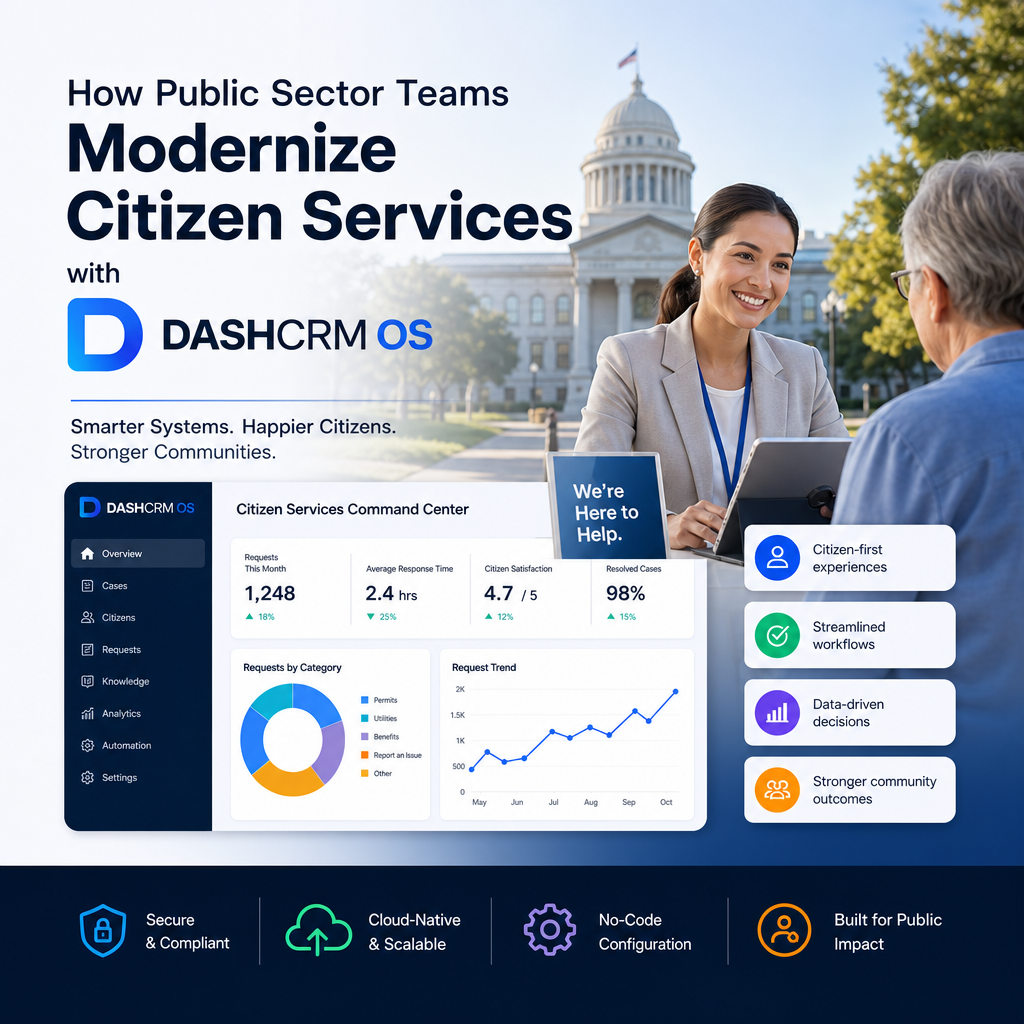
With DASHCRM OS, agencies can track service trends, case volumes, response times, and resolution rates. That information helps leaders identify bottlenecks and improve planning.
Useful Insights Include:
- Which service categories generate the most requests
- Where delays happen most often
- Which departments need more support
- How citizen satisfaction changes over time
These insights make it easier to allocate resources effectively and improve service quality across the board.
A Practical Path to Modernization
Public sector modernization does not have to happen all at once. Many teams begin by digitizing the most common citizen requests, then expand workflows and reporting as adoption grows.
A smart rollout often includes:
- Identifying the highest-volume service requests
- Mapping current workflows and handoffs
- Configuring centralized case tracking
- Automating routine notifications and tasks
- Training staff and gathering feedback
- Measuring results and refining the process
This step-by-step approach helps agencies create real improvements without disrupting essential services.
Building Trust Through Better Service
At its core, public service modernization is about trust. Citizens want to know their concerns are being heard and addressed. Staff want tools that help them work efficiently and deliver on that promise.
DASHCRM OS supports both goals by giving public sector teams a more organized, responsive, and transparent way to manage citizen services. When agencies can resolve requests faster, communicate more clearly, and operate with better insight, everyone benefits.
Modern citizen service is not just about technology. It is about making government easier to reach, easier to trust, and easier to navigate. DASHCRM OS helps make that possible.