
How DashCRM Uses Multi-Agent Intelligence to Predict and Route Leads
How DashCRM Predicts, Scores, and Routes Leads Using Multi‑Agent Intelligence
In the realm of customer relationship management, staying ahead means embracing technology that not only understands current consumer behaviors but also predicts future trends. DashCRM stands out in this arena. It harnesses the power of multi-agent intelligence to transform how businesses predict, score, and route leads. This blog explores how DashCRM implements this innovative technology to optimize sales strategies and enhance customer engagement.
Understanding Multi-Agent Intelligence
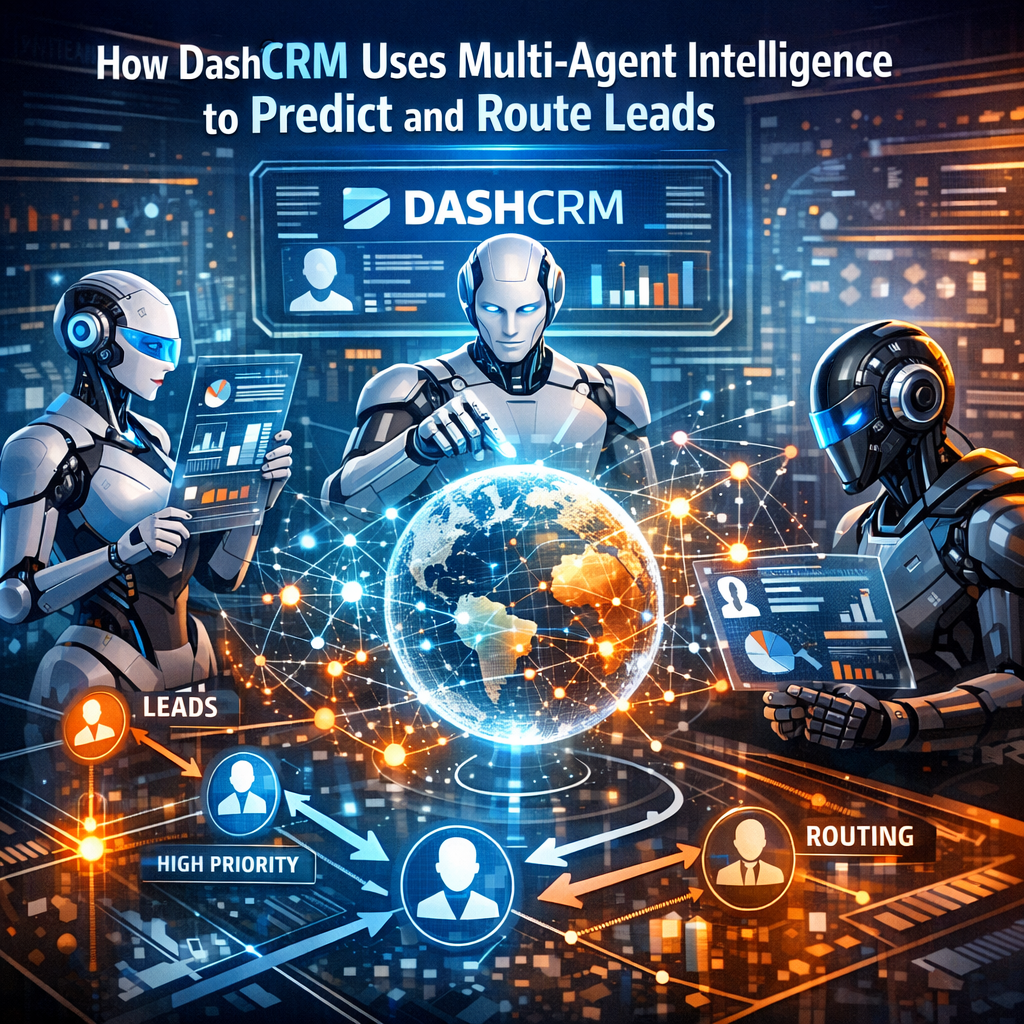
Multi-agent intelligence refers to systems where multiple intelligent agents interact or work together to solve tasks or make decisions. These agents can range from automated algorithms to sophisticated AI models, each designed to handle specific processes or datasets.
In the context of CRM, this translates into a more dynamic, responsive, and personalized approach to managing customer interactions and predicting future behaviors.
Lead Prediction: Turning Data into Insights
Data Integration and Analysis
DashCRM integrates data from various sources including social media, website interactions, and past purchase history to create a comprehensive view of each lead. By analyzing this rich dataset, the multi-agent intelligence system identifies patterns and trends that are not immediately obvious.
Behavioral Prediction
Using advanced machine learning models, DashCRM predicts potential customer behavior. This might include predicting which products a customer is likely to purchase next, forecasting when they might be ready to make a purchase, or identifying at-risk customers who may need additional engagement to remain satisfied.
Lead Scoring: Prioritizing with Precision
Automating Decision-Making
Each lead is scored based on their likelihood to convert, the potential value of the conversion, and their overall engagement level. This scoring is not static; instead, it’s constantly updated in real-time as new data comes in, thanks to the multi-agent intelligence framework.
Custom Score Metrics
Different businesses might need to focus on different aspects of a lead. DashCRM allows the customization of scoring metrics to align with specific business goals. For instance, a luxury brand might value spending power more highly, while a service-oriented business might prioritize engagement and responsiveness.
Routing Leads: Enhancing Engagement and Conversion
Distribution Based on Agent Strengths
Once scored, leads are routed to the most suitable sales agents. Multi-agent intelligence is crucial here—it assesses the strengths and weaknesses of each sales agent and matches them with leads they are most likely to convert.
Real-Time Adjustment
As interaction progresses, DashCRM can dynamically reroute leads based on real-time performance data and changing circumstances or sales agent availability, ensuring that no opportunity is lost.
Advantages of DashCRM’s Multi-Agent System
Increased Efficiency
Automating prediction, scoring, and routing processes reduces the workload on human agents and eliminates much of the guesswork involved in lead management.
Enhanced Customer Satisfaction
By understanding customer needs and behaviors better, businesses can tailor their approaches, offers, and interactions more effectively, leading to higher customer satisfaction and retention.
Higher Conversion Rates
Precisely targeted interactions and strategically routed leads naturally lead to higher conversion rates and, consequently, increased revenue.
Scalability
The systems are designed to scale seamlessly as business grows, capable of handling an increasing number of leads without loss in performance.
Conclusion
DashCRM, through its use of multi-agent intelligence, offers businesses a sophisticated toolkit for enhancing their CRM strategies. By effectively predicting, scoring, and routing leads, DashCRM not only streamlines the sales process but also provides a significantly enhanced customer experience. In the age of data, such intelligent systems can be the difference between a business that thrives and one that lags behind.