
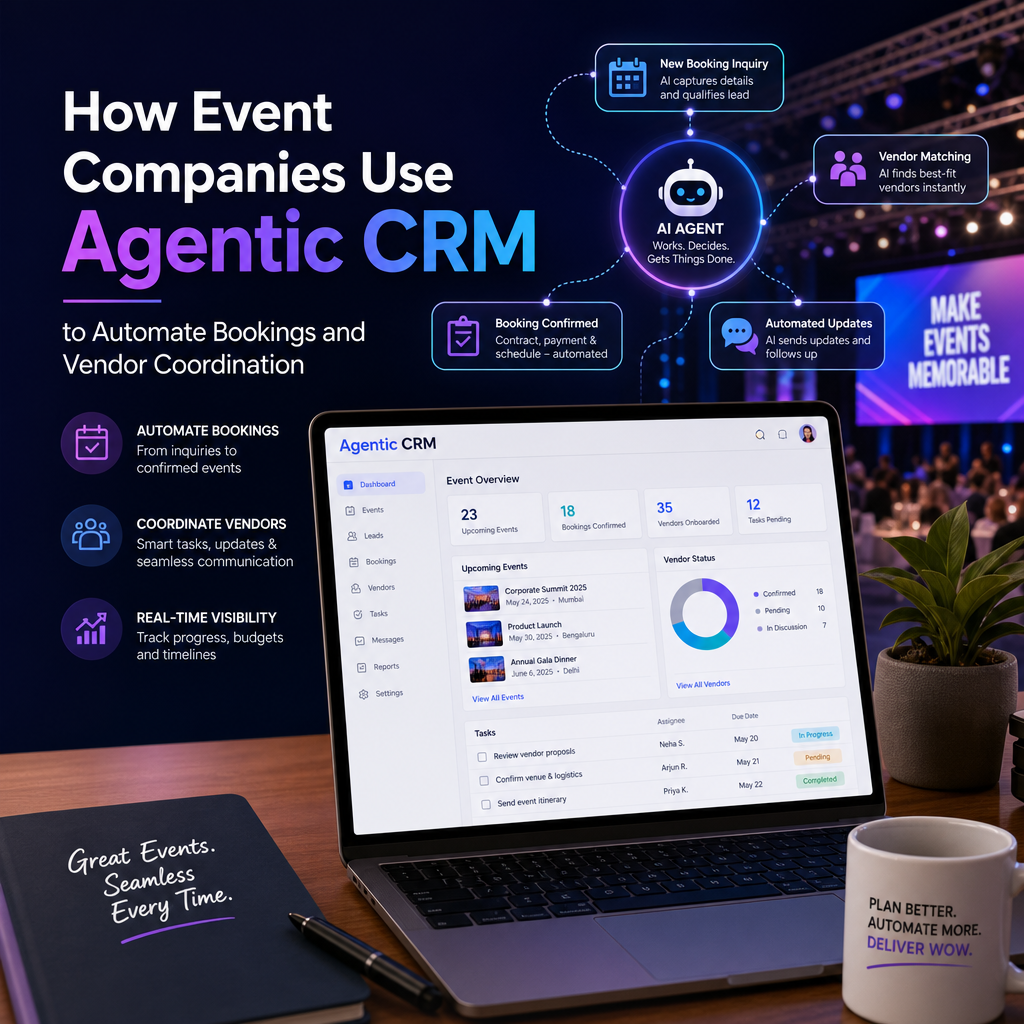
How Event Companies Use Agentic CRM to Automate Bookings and Vendor Coordination
How Event Companies Use Agentic CRM to Automate Bookings & Vendor Coordination
Event planning moves fast. One missed email, one delayed vendor reply, or one double-booked time slot can create stress for the whole team. That is why more event companies are turning to agentic CRM to handle repetitive tasks, keep communication flowing, and reduce manual coordination.
Unlike a traditional CRM that simply stores contacts and tracks leads, an agentic CRM takes action. It can follow rules, make decisions based on context, and complete routine workflows on its own. For event companies, that means faster bookings, cleaner handoffs, and smoother vendor management.
What Makes Agentic CRM Different?
A standard CRM helps teams organize client data, proposals, and follow-ups. An agentic CRM goes further by acting like a digital coordinator.
It can:
- Respond to incoming booking requests
- Qualify leads based on event type, date, and budget
- Send confirmations and reminders automatically
- Assign tasks to internal team members
- Coordinate availability with vendors
- Flag conflicts before they become problems
This is especially useful in events, where timing matters and multiple people need the same information at the same time.
Automating the Booking Process
The booking process is often the first place where event companies feel pressure. Clients want fast replies, clear pricing, and an easy way to move forward. Agentic CRM helps streamline that experience from the first inquiry.
1. Capturing and routing leads
When a potential client fills out a form or sends an email, the CRM can instantly capture their details. It can then determine what type of event they are planning and route the lead to the right salesperson or planner.
For example, a wedding inquiry can go to one team, while a corporate conference request goes to another.
2. Sending instant follow-ups
Instead of waiting for someone to manually reply, the CRM can send a personalized message right away. It can share next steps, ask for missing details, or offer available time slots for a consultation.
This speed matters. A quick response often increases the chances of converting a lead into a booked event.
3. Handling scheduling automatically
Agentic CRM platforms can connect with calendars and booking tools to find open times without back-and-forth emails. Clients can book discovery calls, walkthroughs, or planning meetings based on real availability.
That saves time for both sides and reduces the risk of mistakes.
Simplifying Vendor Coordination
Vendor coordination is another area where event companies spend a lot of time. From caterers and florists to AV teams and venues, every vendor has their own timeline, contact process, and requirements.
An agentic CRM can keep all of that organized in one place.
Centralized vendor records
The CRM stores vendor profiles, contracts, notes, deadlines, and communication history. That means planners no longer have to search through inboxes or spreadsheets to find important details.
Everything is linked to the event timeline.
Automated task assignment
Once a booking is confirmed, the CRM can create vendor-related tasks automatically. For example:
- Send catering requirements by a certain date
- Request floor plan approval from the venue
- Confirm delivery windows with décor vendors
- Remind the AV team about setup times
These tasks can be assigned to the right team member and tracked in real time.
Smart reminders and follow-ups
Vendor communication often depends on reminders. If a florist has not responded about final counts, the CRM can follow up automatically. If a deadline is approaching, it can alert the planner before the situation becomes urgent.
This keeps projects moving without constant manual checking.
Reducing Mistakes and Missed Deadlines
In event management, small errors can become expensive. A late vendor confirmation can affect logistics. A missed client update can hurt trust. Agentic CRM helps reduce those risks by creating a more reliable system.
It can:
- Track event milestones
- Monitor outstanding approvals
- Escalate overdue tasks
- Prevent duplicate bookings
- Keep records consistent across teams
Instead of relying on memory or scattered notes, event companies can use automation to maintain accuracy.
Improving the Client Experience
Clients may not see the backend systems, but they feel the results. When booking is easy and communication is clear, the experience feels more professional.
With agentic CRM, clients can receive:
- Faster responses
- Clear booking confirmations
- Automatic event updates
- Reminders for payments or meetings
- Personalized communication based on their event type
This creates a smoother journey from inquiry to event day.
Why Event Teams Benefit from Agentic CRM
The biggest advantage of agentic CRM is not just saving time. It is giving event teams more space to focus on creative and high-value work.
Instead of chasing emails or updating spreadsheets, planners can spend more time on:
- Building client relationships
- Designing event experiences
- Solving last-minute challenges
- Improving vendor partnerships
That shift can make a small team feel much more capable and a large team much more coordinated.
A Smarter Way to Run Events
Event companies operate in a world where details matter and deadlines are tight. An agentic CRM helps bring structure to that complexity by automating bookings, managing vendor communication, and keeping everyone aligned.
For teams that want to scale without losing control, it offers a practical advantage. The result is less admin work, fewer errors, and a more seamless experience for clients, vendors, and planners alike.