
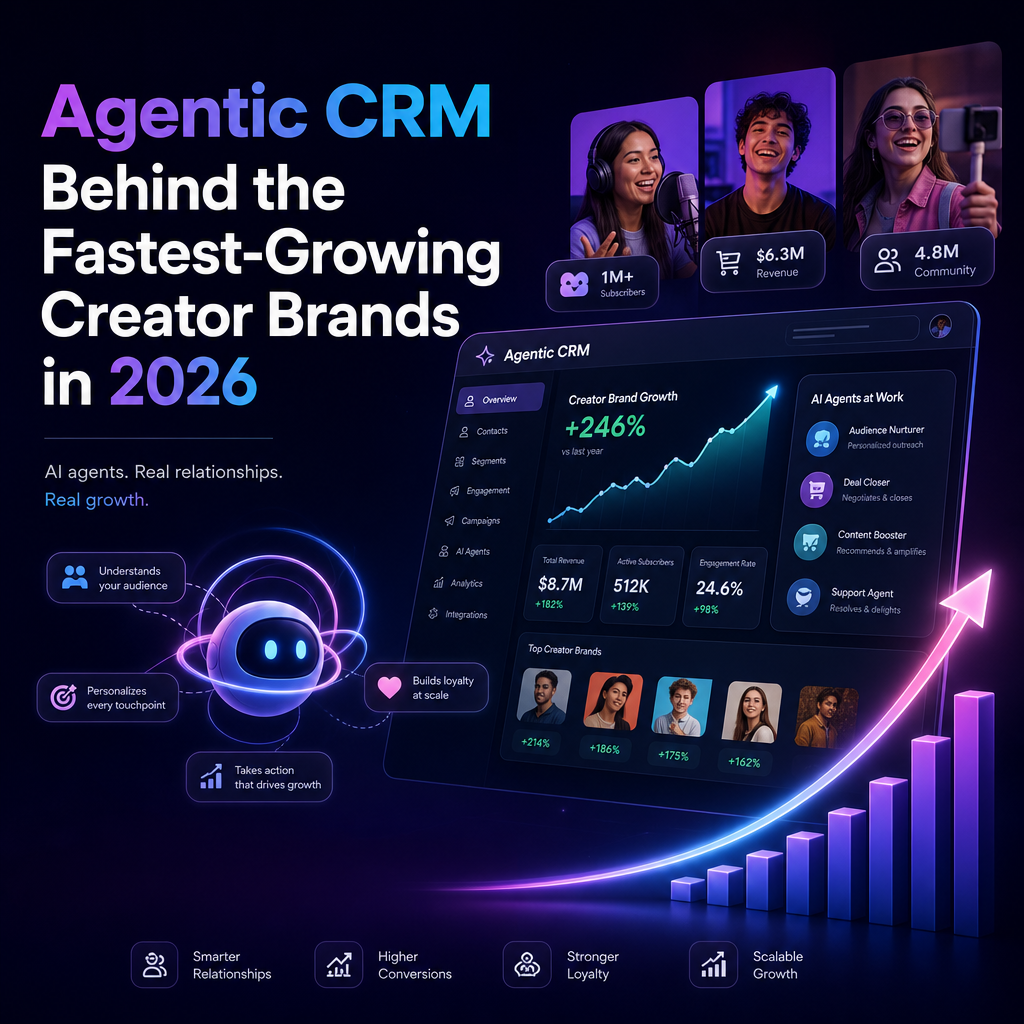
Agentic CRM Behind the Fastest-Growing Creator Brands in 2026
The Agentic CRM Behind the Fastest-Growing Creator Brands in 2026
Creator brands are no longer built on content alone. In 2026, the fastest-growing names in the space are winning because they understand their audiences, respond in real time, and turn attention into repeat revenue. At the center of that shift is the agentic CRM.
Unlike traditional customer relationship tools that simply store contacts and log activity, an agentic CRM can take action. It helps creator-led businesses automate decisions, personalize outreach, and move customers through the journey with far less manual work. For brands scaling across email, community, storefronts, subscriptions, and collaborations, that difference is everything.
What Makes an Agentic CRM Different?
A standard CRM organizes information. An agentic CRM uses that information to act.
It can:
- spot buying patterns
- segment audiences automatically
- trigger messages based on behavior
- recommend next-best actions
- coordinate workflows across channels
For creator brands, this means less time managing spreadsheets and more time building products, content, and community. The CRM becomes a growth system rather than just a database.
From Passive Tracking to Active Growth
Traditional CRMs are built around records. Agentic CRMs are built around outcomes.
That shift matters because creator businesses move quickly. A product can go viral in a day. A launch can spike demand overnight. A community trend can emerge from a single video or livestream. An agentic CRM helps brands respond immediately instead of waiting for a human to catch up.
Why Creator Brands Need This in 2026
The creator economy has matured. Audiences expect more relevance, faster communication, and smoother buying experiences. At the same time, creators are running more complex businesses than ever.
They may be managing:
- digital products
- physical merch
- memberships
- brand partnerships
- affiliate offers
- paid communities
- live events
That level of complexity breaks old systems. The fastest-growing brands in 2026 are using an agentic CRM to connect the dots.
1. Personalization at Scale
Creators build trust through authenticity. But once a brand grows, it becomes harder to make every follower feel seen.
An agentic CRM helps by tracking signals like:
- what someone clicks
- what they buy
- which content they watch
- how often they engage
- whether they return after a launch
With that data, creator brands can send the right message at the right moment. A first-time buyer can get a different journey than a longtime subscriber. A fan who watches every livestream can be invited into premium offers. A dormant customer can be re-engaged with timely content.
2. Faster Launches
Creator brands often grow around launches. The issue is that launch execution can become messy fast.
An agentic CRM can automate:
- waitlist follow-ups
- cart-abandonment sequences
- upsell recommendations
- post-purchase onboarding
- review and referral requests
This creates a smoother launch system that runs even when the creator is focused on content or travel. Instead of relying on manual reminders, the CRM helps the brand act like a small but highly organized team.
3. Better Community Retention
The best creator brands do not just acquire customers. They keep them.
Retention is where an agentic CRM shines. It can identify members who are slipping away, surface loyal superfans, and trigger retention campaigns before churn happens.
That might include:
- exclusive early access
- loyalty rewards
- personalized check-ins
- reactivation campaigns
- membership renewal reminders
In 2026, retention is a major competitive advantage. Communities that feel recognized tend to stay longer and spend more.
The Core Features Driving Growth
The most effective agentic CRMs for creator brands share a few key capabilities.
Intelligent Segmentation
Instead of creating static lists, the system continuously updates audience groups based on behavior. That means brand teams can target people based on real intent, not guesswork.
Automated Decisioning
The CRM does more than schedule messages. It chooses actions based on rules, patterns, and predictive signals. For example, if someone buys a starter product, the system can suggest a higher-value offer or educational series.
Multi-Channel Coordination
Creator brands rarely live in one place. They show up on email, SMS, social, storefronts, and community platforms. An agentic CRM helps keep messaging consistent across all of them.
Revenue Intelligence
The best systems also show which audiences convert, which offers perform best, and where the customer journey breaks down. That allows creators to make smarter decisions without hiring large analytics teams.
How the Fastest-Growing Brands Use It
The creator brands scaling fastest in 2026 are not trying to automate everything. They are automating the repetitive parts so they can focus on the creative parts.
They use agentic CRM systems to:
- capture leads from content and launches
- segment fans by interest and purchase behavior
- personalize product recommendations
- nurture customers after the first sale
- identify high-value audience groups
- trigger retention and reactivation workflows
This makes the business feel more responsive, more human, and more consistent.
The Real Competitive Edge
The biggest advantage of an agentic CRM is not just efficiency. It is speed with intelligence.
Creator brands are built in public. Trends shift quickly. Audience expectations rise just as fast. The brands that win are the ones that can recognize intent, act on it, and do it repeatedly without burning out the team.
That is why the agentic CRM is becoming the backbone of creator businesses in 2026. It helps them turn content into commerce, followers into customers, and customers into communities.
Final Thoughts
The next generation of creator brands will not be defined by how much content they publish. It will be defined by how well they understand and serve their audience across every touchpoint.
An agentic CRM gives them that power. It combines automation, personalization, and real-time action in one system, making it easier to scale without losing the human touch.
For creator-led businesses that want to grow faster in 2026, this is no longer optional. It is the operating system behind the brands everyone else will be trying to catch.