
How Contractors Use Agentic CRM to Automate Estimates, Scheduling, Follow-Ups
How Contractors Use Agentic CRM to Automate Estimates, Scheduling & Follow-Ups
Contractors juggle a lot at once: new leads, estimate requests, job scheduling, and client communication. When those tasks are managed manually, small delays can turn into lost bids, missed appointments, and slow cash flow.
That is where an agentic CRM changes the game. Instead of acting like a static contact database, it helps contractors automate repetitive work, respond faster, and keep every project moving. For busy teams, that means less time on admin and more time on the job site.
What Makes an Agentic CRM Different?
A traditional CRM stores customer details and tracks interactions. An agentic CRM goes further by taking action on behalf of the contractor. It can trigger workflows, send messages, update records, and move leads through the pipeline based on real activity.
For contractors, that means the system is not just organizing data. It is actively helping run the business.
In practical terms, it can:
- Capture new leads from websites, forms, calls, or ads
- Send instant responses to incoming inquiries
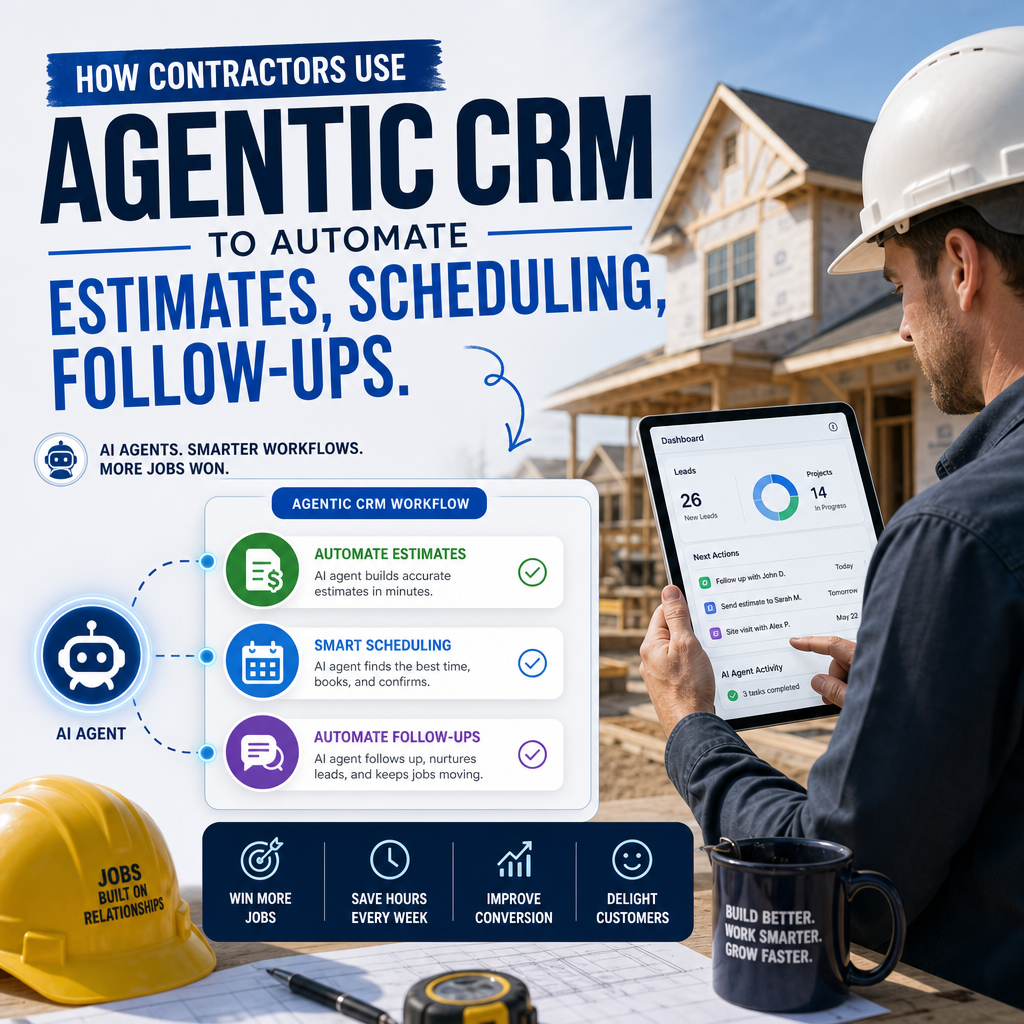
- Build and send estimates automatically
- Schedule appointments and reminders
- Follow up with prospects after quotes are sent
- Notify the team when a job is ready to move forward
This creates a faster and more reliable customer experience from the first contact to the final invoice.
Automating Estimates Without the Back-and-Forth
Creating estimates is one of the most time-consuming parts of the sales process. Contractors often need to gather details, check availability, calculate labor and materials, and send pricing quickly enough to stay competitive.
An agentic CRM can simplify this process.
It helps contractors by:
- Collecting project details through a web form or chat
- Pulling in service pricing or estimate templates
- Routing the request to the right team member
- Generating a draft estimate based on preset rules
- Sending the quote to the customer for approval
This cuts down on manual data entry and reduces the chance of missed details. It also speeds up response time, which can make a big difference when a customer is comparing multiple bids.
A quick estimate response often signals professionalism and reliability. In a crowded market, that alone can improve conversion rates.
Scheduling Jobs Without the Calendar Chaos
Once a customer approves an estimate, the next challenge is scheduling. Many contractors still rely on phone calls, text messages, and spreadsheets to coordinate appointments. That approach works until the volume increases.
With an agentic CRM, scheduling can become much more organized.
The system can:
- Offer available time slots automatically
- Confirm appointments with customers
- Send reminders before the visit
- Update the team calendar in real time
- Reschedule jobs when conflicts arise
This reduces double bookings, no-shows, and long phone tag conversations. It also makes the customer experience smoother, because clients get clear communication without having to chase updates.
For service contractors, this is especially valuable. Whether it is an HVAC repair, a roofing inspection, or a remodeling consultation, the CRM can help keep appointments on track from the beginning.
Following Up Without Letting Leads Go Cold
Not every prospect signs right away. Some need time to review the estimate, compare options, or ask more questions. If follow-up is inconsistent, many of those leads disappear.
An agentic CRM helps contractors stay top of mind without needing to manually track every lead.
Follow-up automation can include:
- A thank-you message after the first inquiry
- A reminder after the estimate is sent
- A second touchpoint a few days later
- A check-in if the customer has not responded
- A review request after the job is completed
These automated messages keep the conversation going at the right time. They also help contractors maintain a professional, responsive image even when the office is busy.
The goal is not to spam the customer. It is to create a dependable communication flow that moves people forward naturally.
Why Contractors Benefit Most from Automation
Contracting businesses often operate with lean teams. The same people handling sales may also be managing crews, supplies, and customer service. That makes automation especially useful.
An agentic CRM gives contractors a way to reduce manual work across the entire client journey.
Key benefits include:
- Faster lead response times
- More accurate estimates
- Better appointment management
- Consistent customer communication
- Fewer missed opportunities
- More time for billable work
It also helps businesses look more established and trustworthy. Customers notice when communication is prompt, organized, and proactive.
Getting Started with an Agentic CRM
Contractors do not need to automate everything at once. A smart rollout usually starts with the biggest time savers.
A good first setup might include:
- Instant lead capture from website forms
- Automatic estimate templates
- Appointment confirmations and reminders
- Follow-up sequences for unresponsive leads
- Post-job review requests
Once these basics are in place, the CRM can be expanded to handle more advanced workflows, such as job status updates, team notifications, or payment reminders.
The Bottom Line
Contractors use an agentic CRM to automate the parts of the business that slow them down: estimates, scheduling, and follow-ups. By turning repetitive admin tasks into guided workflows, they can respond faster, stay organized, and close more jobs.
In a business where timing and communication matter, that kind of automation is more than convenient. It is a competitive advantage.