
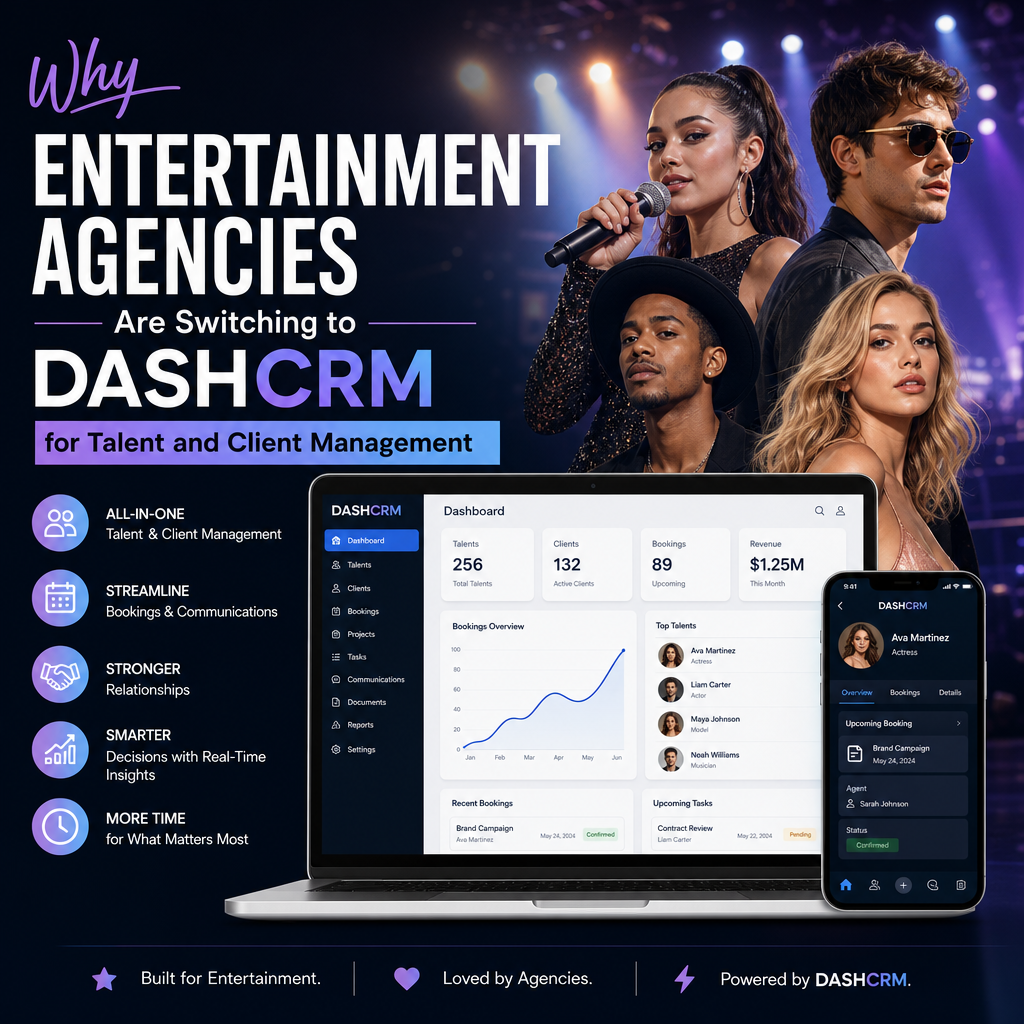
Why Entertainment Agencies Are Switching to DASHCRM for Talent and Client Management
Why Entertainment Agencies Are Switching to DASHCRM for Talent & Client Management
Entertainment agencies move fast. One day it’s casting calls, the next it’s client approvals, contract revisions, travel schedules, and last-minute talent changes. With so many moving parts, spreadsheets and scattered inboxes quickly become a problem.
That is why more agencies are turning to DASHCRM for talent & client management. It gives teams one place to organize relationships, track bookings, and keep communication flowing without the chaos of disconnected tools.
The Real Challenge in Entertainment Agency Management
Entertainment agencies don’t just manage contacts. They manage people, projects, deadlines, negotiations, and expectations at the same time.
A typical agency may need to handle:
- Talent profiles and availability
- Client communication and follow-ups
- Auditions, bookings, and event schedules
- Contract details and approvals
- Payment tracking and reminders
- Notes from previous conversations
When this information lives in separate systems, mistakes happen. A missed callback, an outdated availability note, or a lost email thread can damage trust and cost a booking.
Why Traditional Tools Fall Short
Many agencies start with spreadsheets, shared drives, or basic CRM software. While these tools work for a while, they rarely scale well in a fast-paced entertainment environment.
Common issues include:
- Duplicate or outdated contact records
- No clear visibility into talent availability
- Slow response times to clients
- Poor internal collaboration
- Limited tracking of deals and bookings
- Difficulty managing both talent and client pipelines together
A general-purpose system often forces teams to adapt their workflow to the software. Entertainment agencies need the opposite: software that adapts to the way they work.
What Makes DASHCRM Different
DASHCRM is designed to simplify the relationship-heavy workflows that agencies depend on every day. Instead of juggling separate tools for client management and talent management, teams can centralize everything in one platform.
1. Centralized Talent and Client Records
One of the biggest advantages of DASHCRM for talent & client management is having a single source of truth. Agency staff can store contact details, notes, history, documents, and communication records in one place.
This makes it easier to:
- See who has been contacted
- Track prior interactions
- Share information across teams
- Avoid repeating questions or missing details
When everyone has access to the same up-to-date data, the entire agency works more efficiently.
2. Faster Booking Workflows
Entertainment bookings often move quickly. Clients want options fast, and talent needs timely updates. DASHCRM helps agencies respond without losing momentum.
By keeping workflows organized, teams can:
- Match talent to opportunities faster
- Monitor booking status in real time
- Follow up on pending approvals
- Reduce delays caused by manual admin work
That speed matters. In a competitive market, the agency that responds first often wins the work.
3. Better Communication Across Teams
Agencies usually have multiple people involved in the process: talent agents, booking coordinators, account managers, and admins. Without a clear system, communication gets messy.
DASHCRM helps keep internal and external communication aligned. Notes, tasks, reminders, and status updates are all tied to the right talent or client record. That means fewer missed messages and smoother handoffs.
Stronger Client Relationships
Clients expect professionalism, organization, and quick answers. If an agency cannot provide that consistently, trust begins to weaken.
Using DASHCRM for talent & client management helps agencies deliver a more polished experience. Client-facing teams can quickly access:
- Booking history
- Talent options and preferences
- Contract stages
- Open tasks and deadlines
- Communication logs
This makes every conversation more informed. Instead of searching through emails or asking around for updates, team members can respond with confidence.
More Visibility Into the Sales Pipeline
Entertainment agencies do not just manage current bookings. They also need to track future opportunities. That means keeping an eye on leads, proposals, negotiations, and follow-ups.
DASHCRM gives agencies a clearer view of where each deal stands. This helps teams prioritize the right opportunities and identify bottlenecks before they become lost revenue.
With better pipeline visibility, agencies can:
- Forecast workload more accurately
- Focus on high-value opportunities
- Spot stalled deals early
- Improve follow-up timing
- Measure team performance more effectively
In a business where timing is everything, this kind of visibility is a major advantage.
A Smarter Way to Scale
As agencies grow, manual processes become harder to manage. More talent means more availability changes. More clients means more communication. More bookings means more admin.
DASHCRM helps agencies scale without adding unnecessary complexity. By reducing repetitive tasks and organizing key information, teams can spend more time building relationships and less time chasing details.
This leads to:
- Greater productivity
- Fewer administrative errors
- More consistent client service
- Better talent coordination
- Easier onboarding for new team members
For growing agencies, that operational stability can make a huge difference.
The Bottom Line
Entertainment agencies are switching to DASHCRM because they need more than a basic contact database. They need a system that supports fast-paced bookings, strong client relationships, and efficient talent coordination.
By bringing everything into one platform, DASHCRM for talent & client management helps agencies stay organized, respond faster, and deliver a better experience for everyone involved.
In an industry where timing, trust, and communication matter most, that kind of clarity is not just helpful. It is essential.