
Autonomous Agents in Healthcare CRM: Reducing No-Shows by 40%
The Future of Healthcare CRM: Autonomous Agents That Reduce No‑Shows by 40%
The healthcare industry is facing an ongoing challenge with patient appointment no-shows, which not only disrupt the efficient management of resources but also impact the overall quality of care. With advancements in technology, particularly in Customer Relationship Management (CRM) systems, the future is leaning towards autonomous agents capable of significantly reducing these no-show rates. Let’s explore how these intelligent systems are transforming healthcare CRM.
Understanding the Impact of No-Shows
No-shows in healthcare create a cascade of inefficiencies:
- Lost Revenue: Every missed appointment represents a direct loss of revenue for clinics and hospitals.
- Inefficient Resource Utilization: Scheduled time goes unused, affecting the productivity of healthcare providers.
- Delayed Care: When patients miss their appointments, it delays their own care and can lead to deteriorating health conditions, which may require more intensive treatments later.
The integration of autonomous agents into healthcare CRM systems presents a promising solution to mitigate these issues effectively.
What are Autonomous Agents?
Autonomous agents in the context of healthcare CRM are intelligent systems designed to interact with patients autonomously, handling tasks such as appointment scheduling, reminders, follow-ups, and gathering pre-appointment information. These agents use artificial intelligence (AI) and machine learning algorithms to predict and adapt to the patient’s needs and preferences.
Key Features of Autonomous Healthcare CRM Agents
- Personalized Communication: These systems tailor their communication style and content based on individual patient data, which increases engagement and trust.
- Proactive Scheduling and Rescheduling: They can predict potential no-shows and proactively offer rescheduling options to ensure maximum clinic utilization.
- Real-Time Feedback Collection: After each interaction or appointment, autonomous agents can collect patient feedback, which is invaluable for improving service quality.
Case Studies: Real-World Success
Several healthcare providers have already started implementing autonomous agents within their CRM systems, reporting impressive reductions in no-show rates:
- Mayo Clinic: Implemented an AI-powered scheduling assistant that reminds patients of upcoming appointments and provides easy rescheduling options through their preferred communication channel like SMS or email.
- Cleveland Clinic: Uses autonomous agents to follow up with patients post-appointment to plan future visits and collect feedback, significantly enhancing patient engagement and satisfaction.
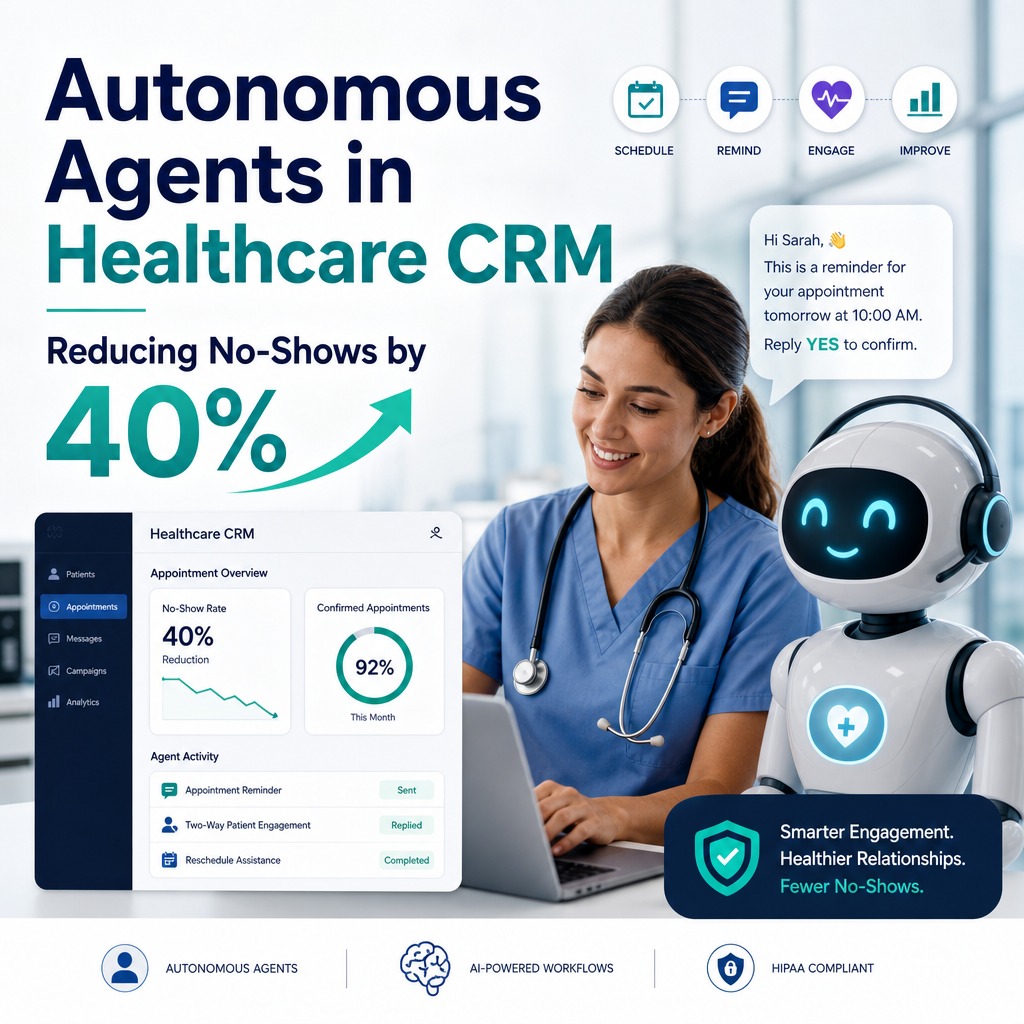
These examples show that autonomous agents can drastically decrease no-show rates, by as much as 40%, improving both operational efficiency and patient care quality.
How Do These Autonomous Agents Reduce No-Shows?
Autonomous agents reduce no-shows through several mechanisms:
- Timely and Personalized Reminders: By analyzing the best time and communication channel for each patient, these agents send reminders that are more likely to be noticed and acted upon.
- Behavioral Predictions: Advanced AI algorithms allow the system to predict which patients are at higher risk of missing appointments and prompt additional communication or rescheduling as needed.
- Ease of Use: Simplifying the process of rescheduling or cancellation for patients can prevent them from simply not showing up if their plans change.
The Future Outlook
The next generation of healthcare CRM systems powered by autonomous agents looks promising. As these technologies continue to evolve, they will become more adept at handling complex interactions and providing more comprehensive care assistance, potentially integrating directly with patient health records to offer real-time, personalized health management insights.
Furthermore, the growth of IoT devices and wearable technology in healthcare can sync with CRM systems, providing a continuous stream of patient health data to aid in proactive care and management.
Conclusion
The integration of autonomous agents in healthcare CRM signifies a shift towards more intelligent, efficient, and patient-centered care systems. By leveraging AI and machine-learning technologies, these tools not only help reduce no-show rates by significant margins but also enhance patient engagement and satisfaction. As we look to the future, the potential for further integration and smarter automation in healthcare CRM is vast, pointing toward a more efficient and effective healthcare system for all.