
Why Education Providers Need a Data-Driven CRM in 2026
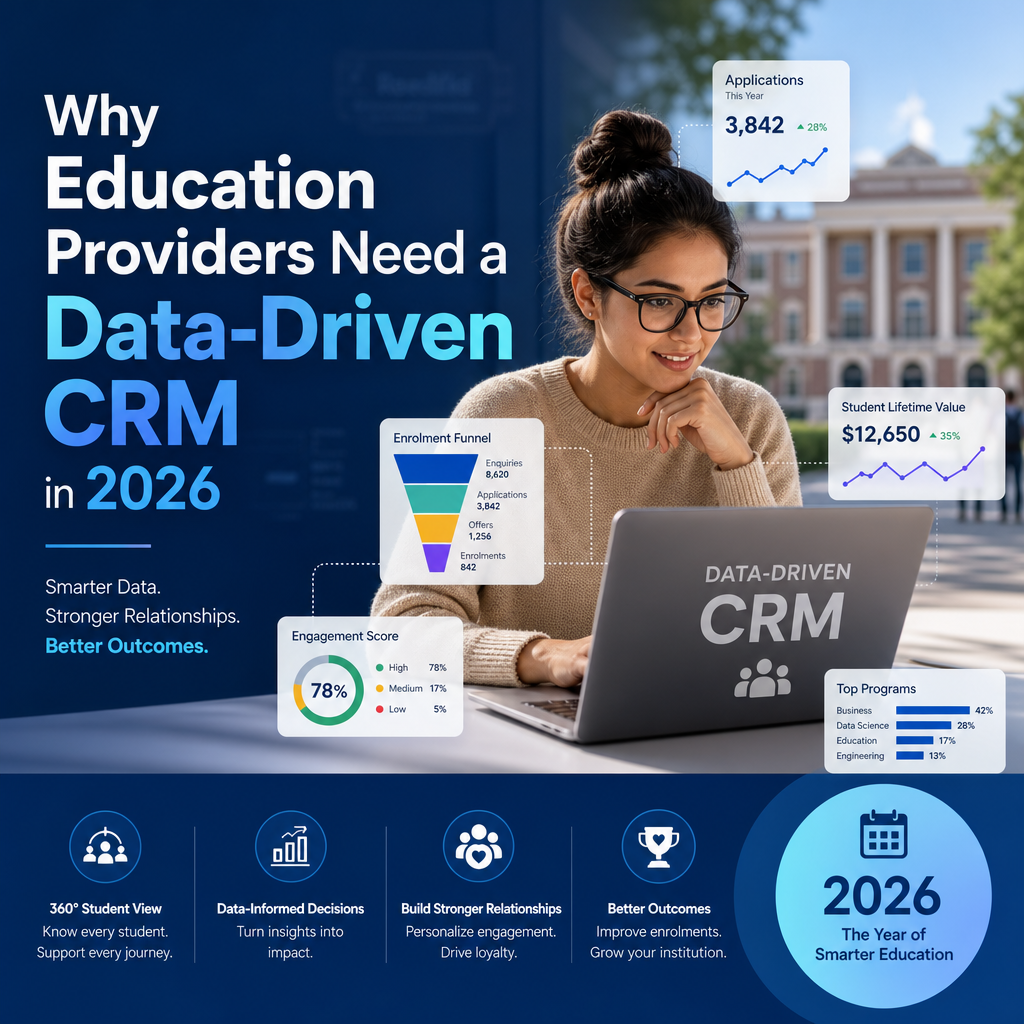
Why Education Providers Need a Data-Driven CRM in 2026
Education is changing fast. In 2026, schools, colleges, training centers, and online learning providers are no longer competing only on curriculum or price. They are competing on experience, speed, personalization, and trust. That is why a data-driven CRM is no longer a nice-to-have. It has become a core system for growth, retention, and better learner outcomes.
A traditional CRM stores contacts and tracks basic interactions. A data-driven CRM goes much further. It turns enrollment, engagement, and performance data into actionable insight. For education providers, that means smarter communication, stronger student support, and better decision-making across the entire learner journey.
What Makes a CRM “Data-Driven”?
A data-driven CRM uses real-time and historical data to guide every interaction. Instead of relying on guesswork, teams can see patterns in student behavior, communication history, application progress, and engagement levels.
This kind of system can bring together data from:
- inquiry forms and website behavior
- admissions workflows
- email and SMS engagement
- class attendance and course progress
- support tickets and feedback
- alumni and parent interactions
The result is a single, more complete view of each learner. For education providers, that view is essential.
Why 2026 Is a Turning Point
By 2026, learner expectations are higher than ever. Students and families want fast responses, personalized guidance, and seamless digital experiences. They also expect education providers to understand their needs without repeating the same information multiple times.
At the same time, institutions are managing more channels, more competition, and more data than before. Admissions teams may use one platform, student support another, and marketing another. Without a data-driven CRM, those systems stay fragmented. That creates missed opportunities and inconsistent communication.
A connected CRM helps education providers keep up with modern expectations while making teams more efficient.
Better Enrollment and Lead Conversion
One of the biggest advantages of a data-driven CRM is improved enrollment management. Education providers often generate many leads, but not all are ready to convert immediately. Some need more information, while others may be comparing options.
A data-driven CRM helps teams identify which leads are most engaged and which ones need follow-up. Admissions staff can prioritize outreach based on behavior, not assumptions.
Benefits for enrollment teams include:
- faster response times
- more accurate lead scoring
- personalized follow-up based on interest
- fewer missed opportunities
- higher application completion rates
When teams know what prospective students care about, they can guide them more effectively through the decision process.
More Personalized Student Support
Personalization is no longer limited to marketing. In education, it matters throughout the learner journey. A data-driven CRM helps providers personalize support from the first inquiry through graduation and beyond.
For example, a system can flag students who:
- have stopped opening emails
- missed a class or session
- have not completed an application step
- need reminders about fees or documents
- may be at risk of dropping out
This allows staff to intervene early. Instead of waiting for a problem to become serious, teams can offer timely help. That improves student satisfaction and retention.
Smarter Communication Across Teams
Education providers often work across multiple departments, and communication gaps can cause confusion. Marketing may send one message, admissions another, and support a third. A data-driven CRM creates shared visibility so every team sees the same student record and interaction history.
This makes communication more consistent and relevant.
A unified CRM can help teams:
- avoid duplicate outreach
- coordinate follow-ups
- maintain tone and messaging consistency
- track communication outcomes
- collaborate more easily
That level of alignment is especially important for larger institutions or providers with multiple programs, campuses, or audiences.
Better Reporting and Decision-Making
In 2026, data is only valuable if it leads to action. A data-driven CRM gives education leaders the reporting tools they need to make better decisions.
Instead of relying on instinct, leaders can track:
- which marketing channels produce the best leads
- where applicants drop off
- which student groups need more support
- how engagement changes over time
- which programs deliver the strongest outcomes
These insights help providers refine recruitment strategies, improve retention efforts, and allocate resources more effectively. Over time, small improvements can have a major impact on growth and performance.
Supporting Long-Term Relationships
Education is not a one-time transaction. The relationship often continues through alumni networks, professional development, referrals, and future enrollments. A data-driven CRM helps providers maintain those relationships long after a course or program ends.
That matters because satisfied learners can become:
- repeat students
- advocates for the institution
- referral sources
- alumni mentors
- donors or community supporters
By tracking the full lifecycle, education providers can build stronger long-term value from every relationship.
The Competitive Advantage in 2026
The education sector is becoming more competitive, more digital, and more data-rich. Providers that still depend on disconnected spreadsheets and manual follow-up will struggle to keep up.
A data-driven CRM gives education providers the ability to work faster, communicate better, and understand learners more deeply. It improves enrollment, retention, and reporting while creating a more personal experience for students.
Final Thoughts
In 2026, the question is not whether education providers should use a CRM. The real question is whether they can afford to use one that is not data-driven. With expectations rising and competition increasing, a smart CRM is one of the most important tools an education provider can invest in.
A data-driven CRM helps teams make better decisions, support students more effectively, and grow with confidence. For education providers looking ahead, it is not just useful. It is essential.